Sports Card Collecting for Beginners: A Complete Start-to-Finish Guide
Learn how to start collecting sports cards, identify cards, understand hobby terms, inspect condition, research prices, protect purchases, and build a focused collection.
- Published
- Read
- 4 min
The best way to start collecting sports cards is to choose a clear goal before you buy. A collection built around one player, team, set, sport, or design is easier to understand and more satisfying to grow than a pile of unrelated cards purchased because they looked urgent.
This guide is the central learning hub for TheCardBoardReport. Use it from beginning to end, or jump to the part that answers your current question.
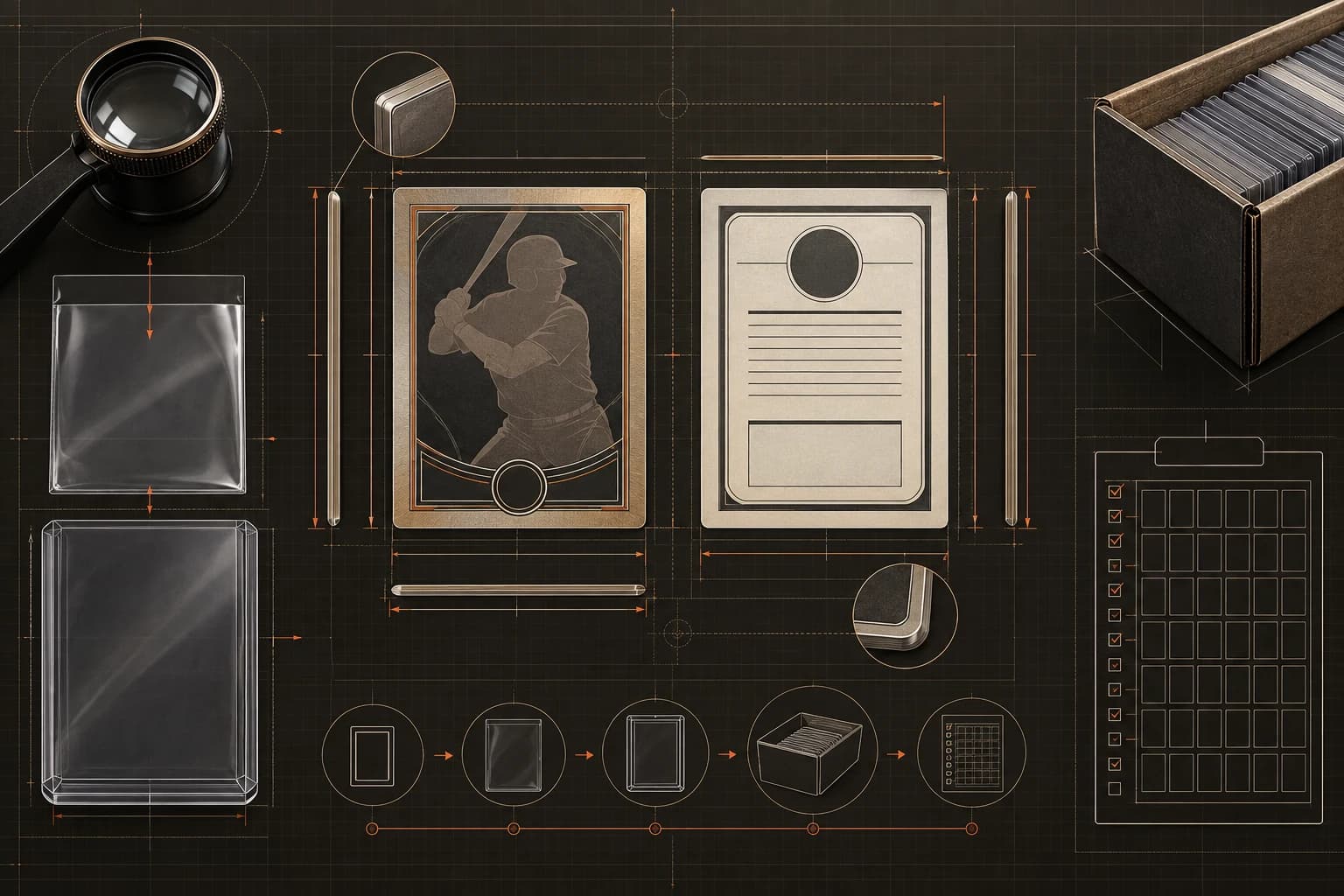
The header is original editorial artwork. It does not depict a specific licensed card or product.
Step 1: Decide what you want the collection to mean
Start with one sentence:
I collect ______ because ______.
Examples include one favorite player, a hometown team, every base card from a set, rookie cards from a season, cards connected to a championship, or designs you enjoy. Your reason can be personal. It does not need to be based on resale value.
If the sentence feels too broad, narrow it by year, product, player, team, card type, or budget. Our guide to building a focused collection turns that idea into a practical plan.
Step 2: Learn to identify the exact card
Two cards showing the same player can come from different years, products, inserts, parallels, variations, or formats. Before buying, record:
- Year and product
- Player and team
- Card number
- Base, insert, parallel, or variation
- Rookie or prospect designation, when applicable
- Autograph, relic, or serial numbering
- Raw or graded status
Use the card front, back, manufacturer checklist, and listing photographs together. The sports card identification guide provides a repeatable process.
Step 3: Understand the language in listings
Words such as “rookie,” “refractor,” “parallel,” “short print,” “case hit,” “relic,” and “pop” can change what a listing means. Some terms are general hobby language; others depend on a manufacturer or product.
Keep our sports card glossary open while reading a checklist or marketplace listing. When a seller uses a term that does not match the visible card or manufacturer documentation, pause and verify.
Step 4: Inspect condition without assigning your own grade
For raw cards, examine corners, edges, surface, and centering. Look at both sides under clear lighting. Photographs cannot reveal every flaw, and an informal inspection is not an official grade.
Follow the raw card condition guide before buying, selling, or submitting a card. If grading is part of your plan, use Is Your Card Worth Grading? to compare the likely benefit with fees, condition risk, and your collecting goal.
Step 5: Research prices using true comparisons
An asking price is what a seller hopes to receive. It is not proof of market value. Compare the exact card with recent completed sales when reliable examples are available, keeping card number, parallel, autograph status, grade, condition, and sale type aligned.
The sports card price research guide explains how to create a useful range without letting one unusually high or low result control your decision.
Step 6: Protect the card immediately
Match the protective material to the card’s thickness and construction. Avoid forcing thick cards into holders designed for standard cards. Keep cards away from water, prolonged direct light, high heat, and sharp humidity swings.
Our long-term storage guide covers sleeves, rigid holders, binders, boxes, environment, and handling. Storage is part of collecting, not an afterthought.
Step 7: Keep a collection record
A simple collection list prevents accidental duplicates and makes future purchases more intentional. Track the card identity, condition, purchase date, total cost, storage location, and any notes that matter to you.
For set building, include missing card numbers. For player collecting, separate base cards, inserts, parallels, autographs, and duplicates.
Step 8: Buy with a prewritten checklist
Before opening a marketplace listing, decide the exact target and maximum delivered cost. Then verify the item type, photographs, seller terms, shipping, and applicable taxes.
The searches below are discovery tools across eBay. Refine them with the year, product, player, and card number you identified. Search results are not endorsements or verified inventory.
Step 9: Know the exit path before you sell
If you later sell duplicates or change focus, accurate identification, careful condition descriptions, secure packaging, and clear photographs matter. Compare the online selling platforms guide, then use the trading-card shipping guide before mailing a card.
A simple first-month plan
- Pick one collecting theme.
- Build a ten-card target list.
- Identify each card before comparing prices.
- Buy slowly enough to learn from each purchase.
- Sleeve, catalog, and store every arrival.
- Review the collection before expanding its scope.
The goal is not to know every product immediately. It is to build a process that keeps working as new cards and releases appear.
Explore cards and compare listings
Affiliate disclosure: As an eBay Partner Network participant, we may earn a commission from qualifying purchases through these links.
These searches cover the wider eBay marketplace. Check the year, format, condition, seller, and shipping date in each listing; search results are not verified inventory or guaranteed availability.
Browse TheCardBoardReport’s own eBay store — current inventory may include other products.