How to Read Sports Card Serial Numbers Before Buying
Learn what /99 and 1/1 mean, separate serial numbers from checklist numbers, and match numbered parallels before comparing sports card listings.
- Published
- Read
- 4 min
A serial number such as 12/99 identifies one copy within a stated run of 99 for that card version. Read both numbers, identify the exact parallel, and then compare matching listings. The stamp alone does not tell you which checklist card you have.
This guide belongs to our collecting guides hub and supports the 2026 Chrome Formula 1 hub. It focuses on reading a numbered single; use today's F1 Hobby, Mega and Value comparison when researching sealed boxes.
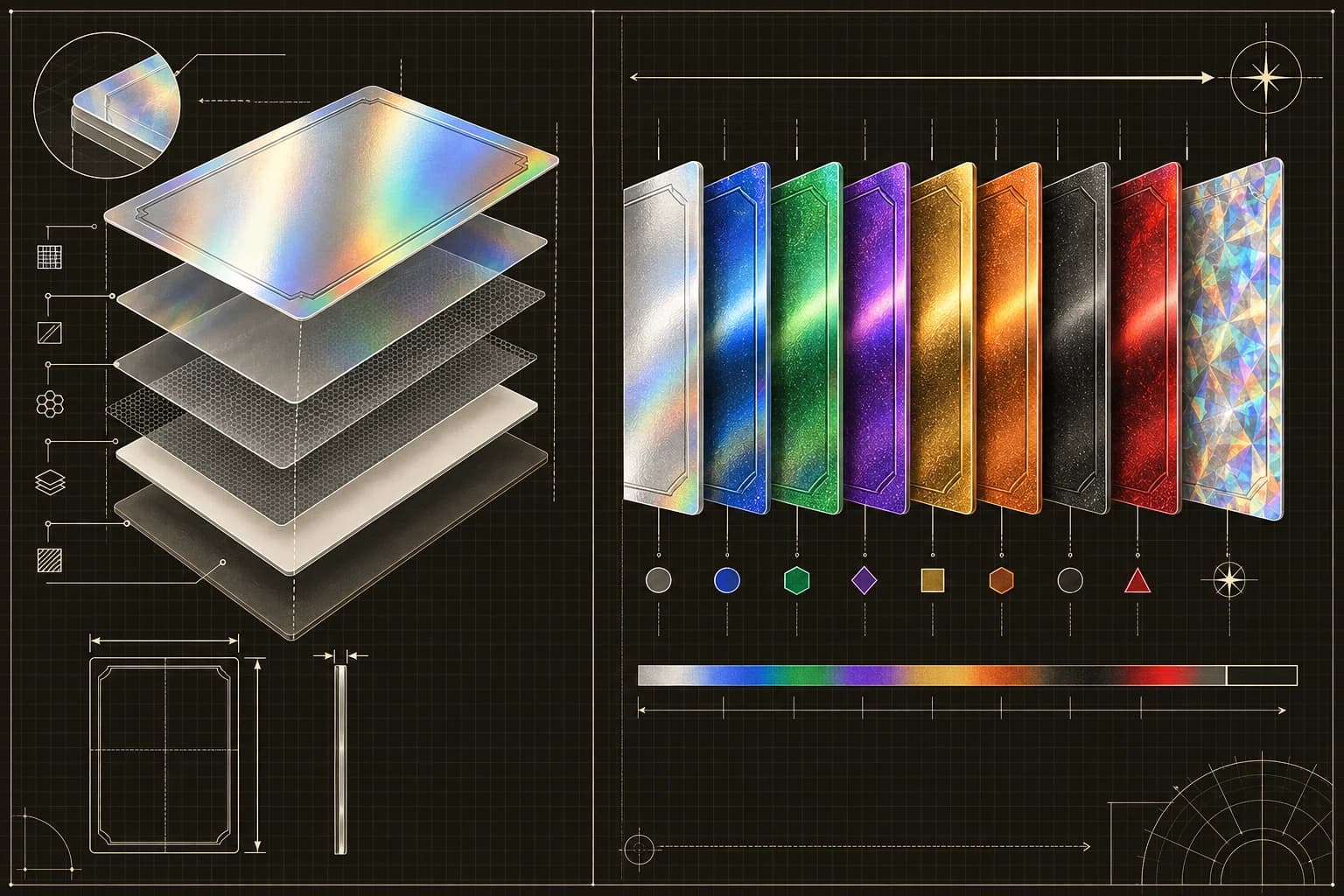
Sources checked October 16, 2026. The blueprint illustrates card construction and parallel finishes; it does not depict actual cards or their serial stamps.
What the numbers before and after the slash mean
Topps' numbered-card definition explains sequential numbering using 10/100: an individual copy numbered 10 in a run of 100. It says the numbering can appear on the front or back.
Applying that convention, these are illustrative examples rather than claims about a particular product:
| Marking | How to read it |
|---|---|
| 12/99 | Copy numbered 12 from a stated run of 99 |
| 03/25 | Copy numbered 3 from a stated run of 25 |
| 1/1 | One copy of that specific version |
| /99 in a listing title | A run size without the individual copy number; inspect the card photograph |
Do not read 12/99 as a condition grade, a price, or a count of copies still available. Record the full stamp when keeping inventory or saving a listing for comparison.
Keep the checklist number separate
An official checklist identifies the card within the set. Sequential numbering identifies a copy within a production run. Record both fields.
For example, page 1 of the official 2026 Chrome F1 checklist lists Lando Norris as card 1 in F1 Drivers and card 89 in F1 Cars. Those are separate checklist entries for the same driver. Neither checklist number tells you the serial stamp on an individual parallel.
Start a research note with year, product, subject, checklist number and subset. Then add the parallel name and complete serial number. Our card identification guide covers the broader identification process.
The run size belongs to the exact version
Topps' hobby glossary describes parallels as related designs distinguished by qualities such as color, pattern or material. It also explains that inserts can have numbered and parallel versions.
That makes the full name essential. A numbered base parallel and a numbered insert should have separate research rows, even if they feature the same person and share a denominator.
A current example: the official Chrome F1 product page names Full Grid Refractors numbered to 22 and 1/1 SuperFractors in its parallel overview. Keep those names attached to the numbering. A 1/1 describes that version; it does not establish that the subject has only one card across the entire release.
If you are assembling a rainbow, make one row per verified parallel and checklist entry. Leave a row unresolved when the photograph and official documentation do not establish the finish. Avoid assigning a parallel name from the apparent color alone.
Numbering and pack odds answer different questions
The stamp gives a stated run size. To research insertion rates, open the manufacturer's odds sheet and find the exact card family and box-format column. A denominator of 99 is not a claim of one card in every 99 packs.
The Topps F1 page links its official odds and checklist separately. Our odds-sheet reading guide explains how to keep those ratios separate from box guarantees.
Check a numbered-card listing before paying
Use this short comparison process:
- Read both sides. Look for the full serial stamp, checklist number and any printed parallel identification. Request a clearer photograph if a digit is obscured.
- Match the complete identity. Keep the year, product, subject, subset, card number, parallel and autograph or relic status together.
- Compare like condition. Use the raw condition guide to inspect the pictured card. Keep raw and graded offers in separate comparisons.
- Research matching sales. Follow our price research guide before using an asking price as your reference. Keep your preferred copy number separate from evidence supporting the price.
- Check the offer and delivered cost. Confirm that you are buying the pictured single, read the seller's terms and add shipping and checkout charges to your budget.
The searches below are starting points for numbered F1 singles. Refine them with your driver, checklist number and target parallel, then verify each result. Our shop offers a separate route to the publication's current eBay inventory; this guide makes no claim that a particular numbered card is in stock.
Choose one checklist entry and record its exact version before comparing offers. Continue through the F1 hub, or use the disclosed listing searches below to research that target.
Explore cards and compare listings
Affiliate disclosure: As an eBay Partner Network participant, we may earn a commission from qualifying purchases through these links.
These searches cover the wider eBay marketplace. Check the year, format, condition, seller, and shipping date in each listing; search results are not verified inventory or guaranteed availability.
- Compare 2026 Chrome F1 numbered parallel singles on eBay
- Research 2026 Chrome F1 Full Grid Refractor singles on eBay
Browse TheCardBoardReport’s own eBay store — current inventory may include other products.