Game-Used vs. Player-Worn Relic Cards: What to Check
Understand game-used, player-worn and event-worn relic wording, then check card backs and compare memorabilia listings with the right questions.
- Published
- Read
- 4 min
Game-used and player-worn describe different claims about a relic's source. PSA's collecting glossary defines game-used equipment as equipment an athlete used during a game. Topps' authenticity terms separately describe game/event-used and player/talent-worn relics. A player-worn label alone is therefore insufficient evidence of game use.
When researching a memorabilia card, record the manufacturer's exact wording before comparing listings. This guide belongs to our Collecting Guides hub and supports the current Royalty Tennis checklist and odds guide.
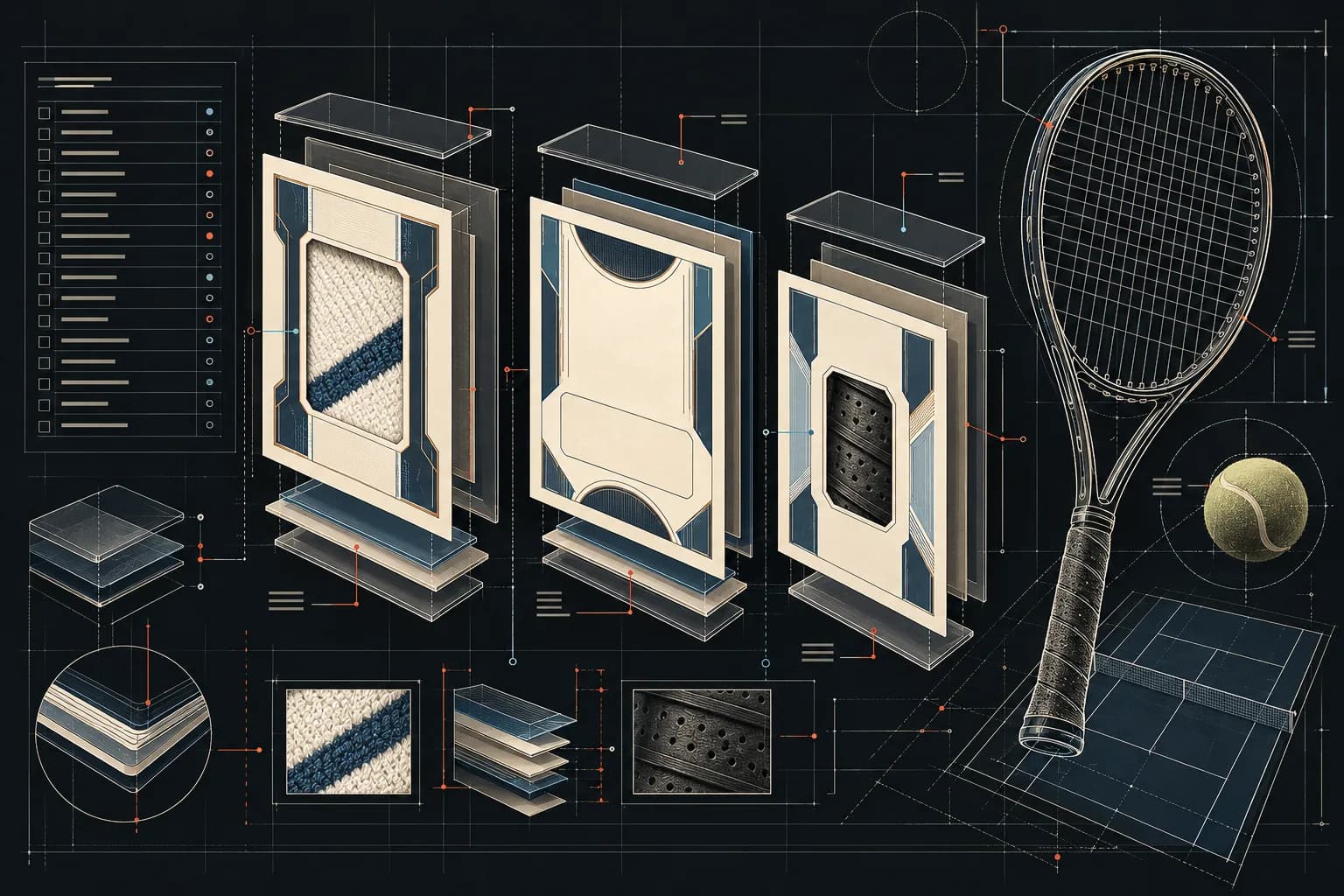
Official sources checked October 14, 2026. The reused blueprint illustrates generic memorabilia-card construction; it is not a photograph of a specific card or evidence of its material's origin.
Game-used, player-worn and event-worn: read the distinction
Use these labels as a starting point for questions, then read the full statement on the actual card:
| Wording | What to take from it | What to check next |
|---|---|---|
| Game-used | A claim that the material came from equipment used during a game | Which athlete, item and any named game does the manufacturer identify? |
| Player-worn | A claim that the player wore the material; the phrase alone does not establish game use | Is there additional wording identifying how or when it was worn? |
| Event-worn | Preserve this description rather than rewriting it as game-worn | Does the manufacturer identify the event or provide further context? |
The game-used definition comes from PSA. For player-worn material, Topps explains that it may be worn in a representative's presence or certified through other industry authentication methods. That statement describes authentication; it does not say every such item was used in competition.
Event-worn and game-worn are also distinct in manufacturer practice. In a November 2014 correction, Panini acknowledged that some Flawless Football cards containing event-worn jersey pieces had been mislabeled game-worn. This historical example establishes the distinction, without making a claim about a current product's contents.
Ask for the entire card back
Before buying, request a readable front-and-back photograph of the exact single. Save the authentication statement with your research notes, including any limits or qualifications.
Work through three separate questions:
- What is the material? Record the item the manufacturer identifies, such as fabric or racket material. Leave it unspecified if the statement does not identify it.
- Whose use or wear is claimed? Look for an explicit connection to the athlete rather than supplying one from the front photograph.
- How specific is the history? Record a named match, event or season only when the manufacturer actually identifies it.
These are reading checks, not a way to authenticate a swatch from a photograph. If the wording is unclear, ask the manufacturer for clarification before making that detail part of your buying decision.
Our sports-card identification guide helps you record the year, product, card number and parallel alongside those notes.
Apply the checks to Royalty Tennis
The current Topps Royalty Tennis page describes match-used memorabilia and names Racket Knob Relics, Racket Knob Autograph Relics, Triumph Relic Autographs and Superior Relic Signatures among its subsets.
Use those names to build a shortlist, then request the individual card's wording. A product overview is a useful lead; it does not identify a particular match for every single you may encounter.
For a racket-knob card, ask what the card says about the racket and its use. For a fabric relic, ask for the material statement. For an autograph relic, check both the signature certification and the memorabilia description rather than treating one as an answer about the other.
The Royalty Tennis guide supplies the checklist research path. If the offer is an unredeemed card, use our Topps redemption guide before proceeding.
Compare listings with the same description
Build your comparison around one exact version. Keep the following beside each listing:
- Year, product, player, subset and card number.
- Parallel and visible serial stamp, if present.
- Exact material-use wording and a saved photograph of it.
- Autograph status and whether the offer is the completed physical card.
- Visible condition, total delivered price and seller terms.
Keep appearance and documented origin as separate notes. A colorful swatch may appeal to you, but its colors cannot answer which game it came from. Decide which details matter to your collection and leave unsupported details blank.
Use our price research guide to compare matching sales and the raw condition guide to organize the photographs you request.
The disclosed eBay searches below separate game-used baseball, player-worn football and Royalty Tennis relic research. Search wording is a discovery tool, not verification of a seller's claim or current availability. You can also reach the publication's store through our shop; this guide does not claim we own a particular relic.
Next step: choose one card family from the Royalty Tennis guide, copy its exact material statement into your notes, and compare the relevant listings. Continue through Collecting Guides for help with identification, condition and buying research.
Explore cards and compare listings
Affiliate disclosure: As an eBay Partner Network participant, we may earn a commission from qualifying purchases through these links.
These searches cover the wider eBay marketplace. Check the year, format, condition, seller, and shipping date in each listing; search results are not verified inventory or guaranteed availability.
- Compare game-used baseball relic singles on eBay
- Compare player-worn football memorabilia singles on eBay
- Research Royalty Tennis relic cards on eBay
Browse TheCardBoardReport’s own eBay store — current inventory may include other products.