PSA Authentic vs. Authentic Altered: What the Labels Mean
Understand PSA Authentic and Authentic Altered labels, why neither is a numerical condition grade, and what to check before comparing card listings.
- Published
- Read
- 3 min
PSA Authentic and Authentic Altered are authentication designations, not numerical condition grades. PSA's official label explanation, in its Japanese FAQ under F-05, describes Authentic as confirming genuineness without assigning a condition grade, and Authentic Altered as a genuine card showing alteration.
The buying question is what PSA recorded for the specific card, rather than what grade you think it might receive. This guide joins our collecting guides hub and builds on how to verify a PSA certification number.
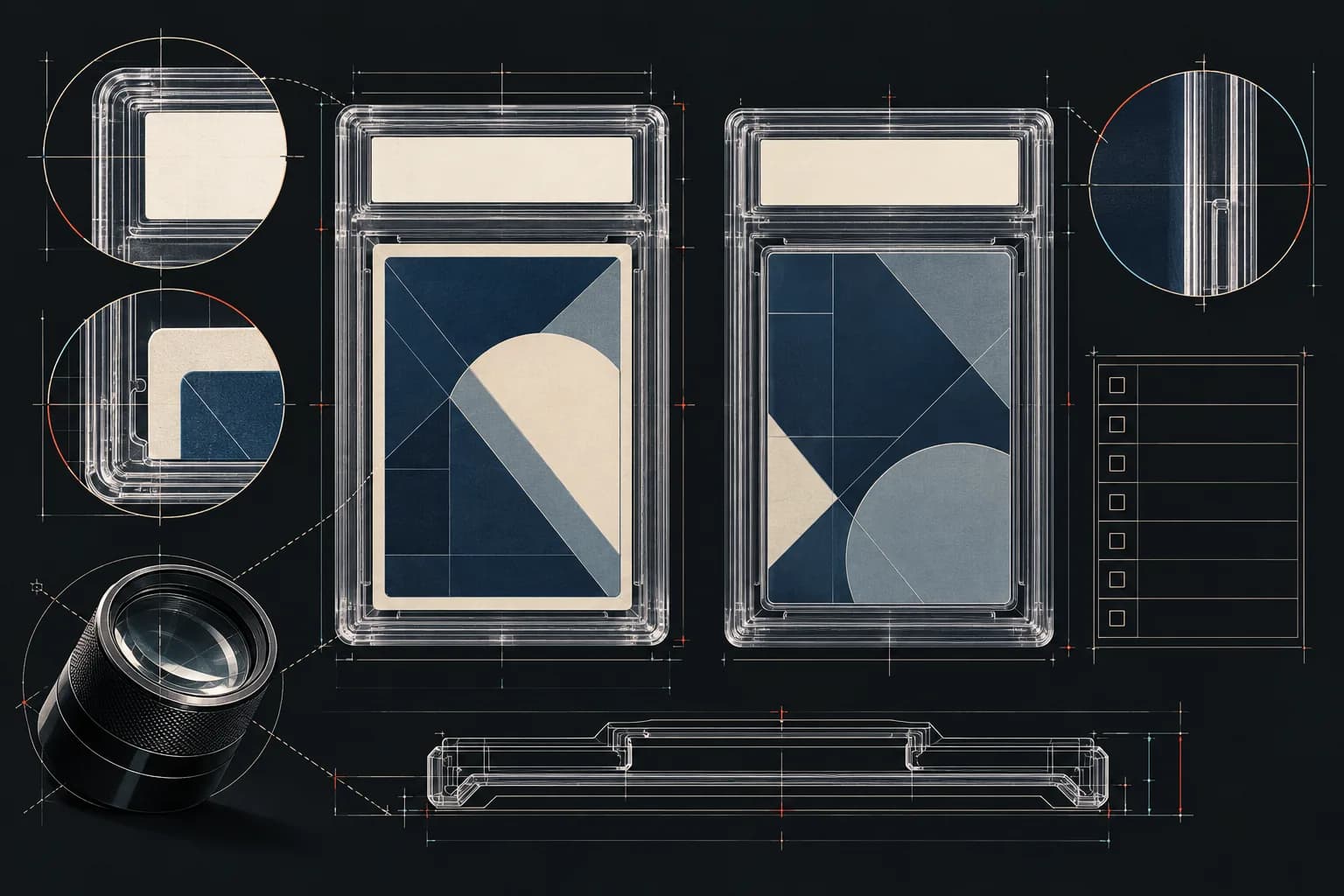
Official sources checked October 12, 2026. The blueprint shows generic holders and blank labels; it is editorial artwork, not a PSA authentication example.
What does PSA Authentic mean?
An Authentic designation does not supply a number to use as a condition grade. PSA's grading standards describe several routes to that result: certain hand-cut cards lacking required borders, minimum-size cases, and factory miscuts. The latter two depend on grader discretion and the relevant submission choice.
Ask why the particular card received that designation. Do not fill the missing number with your own estimate or a seller's suggested grade.
What does PSA Authentic Altered mean?
PSA's no-grade definitions identify trimming, restoration, recoloring, altered stock, and cleaning as findings that may qualify for Authentic Altered encapsulation. Approval is discretionary and subject to the submission requirements. These findings do not receive a numerical grade.
For buying research, request the complete label, independent certification result, and any available explanation of the alteration. Keep unanswered questions in your notes instead of guessing from a photograph.
Does an Authentic label establish that a card is unaltered?
Do not make that assumption. PSA's Authenticity and Grade Guarantee terms say that technical limitations, including label space, can prevent the word Altered from being printed. For that guarantee, PSA treats Authentic and Authentic Altered as potentially interchangeable and does not compensate a difference between those designations.
Our practical takeaway: ask PSA to clarify an ambiguous record before buying. Treat the label wording as the start of research, rather than proof that no alteration exists. That guarantee provision is not a rule for predicting market prices.
Is Authentic Altered the same as counterfeit?
No. PSA distinguishes alteration findings from N4, Questionable Authenticity, in its grading standards. N4 covers apparent counterfeits or an autograph judged nongenuine and does not qualify for encapsulation.
Keep the authentication designation and your condition observations in separate fields. Our raw card condition guide provides an inspection worksheet; use it to request better photographs, not to override PSA's finding.
A listing comparison worksheet
Before comparing two offers, collect these details for each one:
| Detail | What to record |
|---|---|
| Card identity | Year, set, player, number, and version |
| Full designation | Exact photographed label wording and lookup result |
| Reason or uncertainty | Documented explanation, or a question to resolve with PSA |
| Photographs | Complete holder front and back, label, and useful card close-ups |
| Sale evidence | Comparable completed sales with matching designations |
| Purchase terms | Seller description, delivery charges, and stated terms |
Enter the number yourself at PSA Cert Verification. PSA warns that genuine certification numbers can appear on counterfeit labels and that a database match does not authenticate the actual online offer.
For a modern baseball comparison, use a set reference such as our Bowman Chrome checklist research guide to establish the version first. A checklist identifies the collectible; it does not explain an individual slab's designation.
How should you compare prices?
Keep numerically graded cards, Authentic cards, and Authentic Altered cards in separate rows while researching. Record differences in the card and available documentation rather than applying a fixed discount or treating an asking price as a completed sale. Our sports-card price research guide helps organize those comparisons.
If you are considering submitting a raw card, continue to is your card worth grading? and check PSA's current requirements before choosing a service. This guide explains buying labels, not an expected submission result.
Next step: choose one candidate from the disclosed eBay searches below, add its exact year and player to your search, and complete the worksheet. Resolve any designation question before purchasing. You can also visit our shop to browse the linked store's current inventory; these searches cover the wider marketplace and do not establish that we own a particular card.
Explore cards and compare listings
Affiliate disclosure: As an eBay Partner Network participant, we may earn a commission from qualifying purchases through these links.
These searches cover the wider eBay marketplace. Check the year, format, condition, seller, and shipping date in each listing; search results are not verified inventory or guaranteed availability.
Browse TheCardBoardReport’s own eBay store — current inventory may include other products.